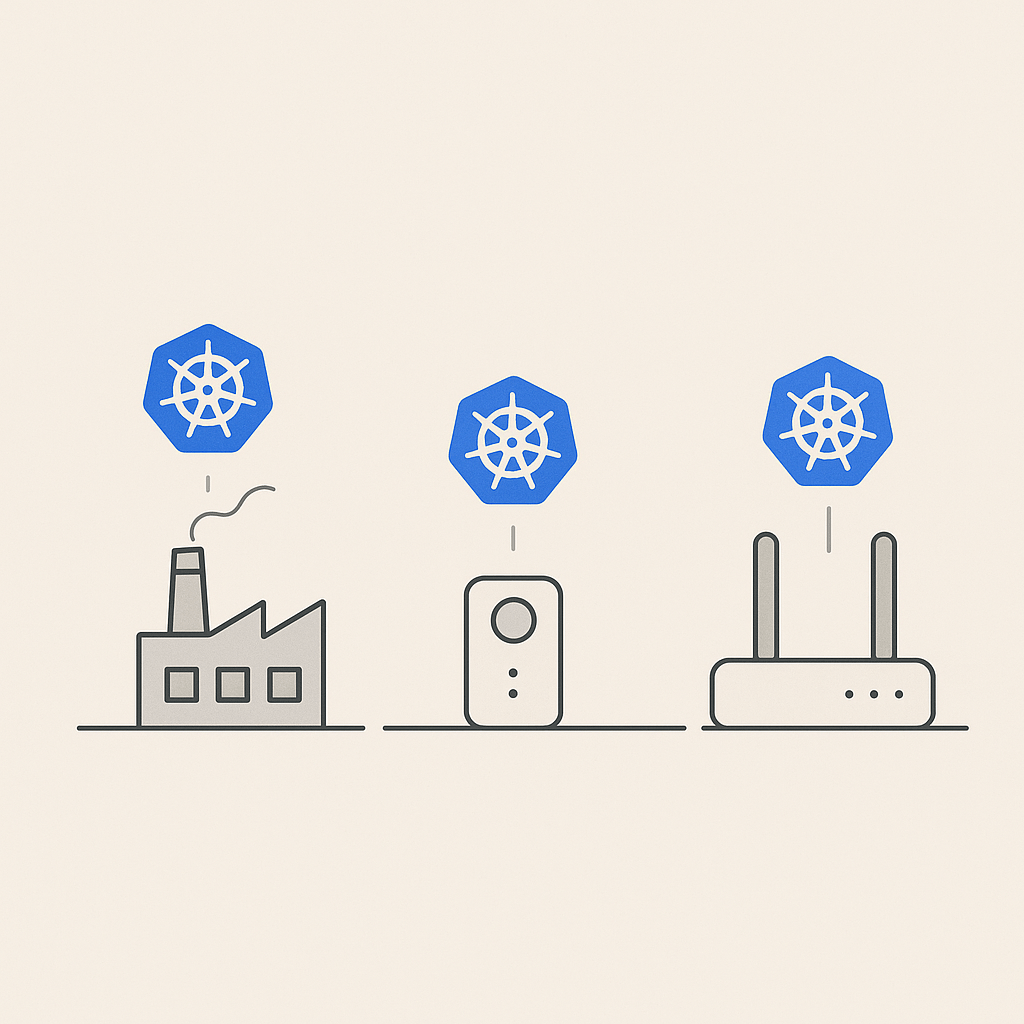
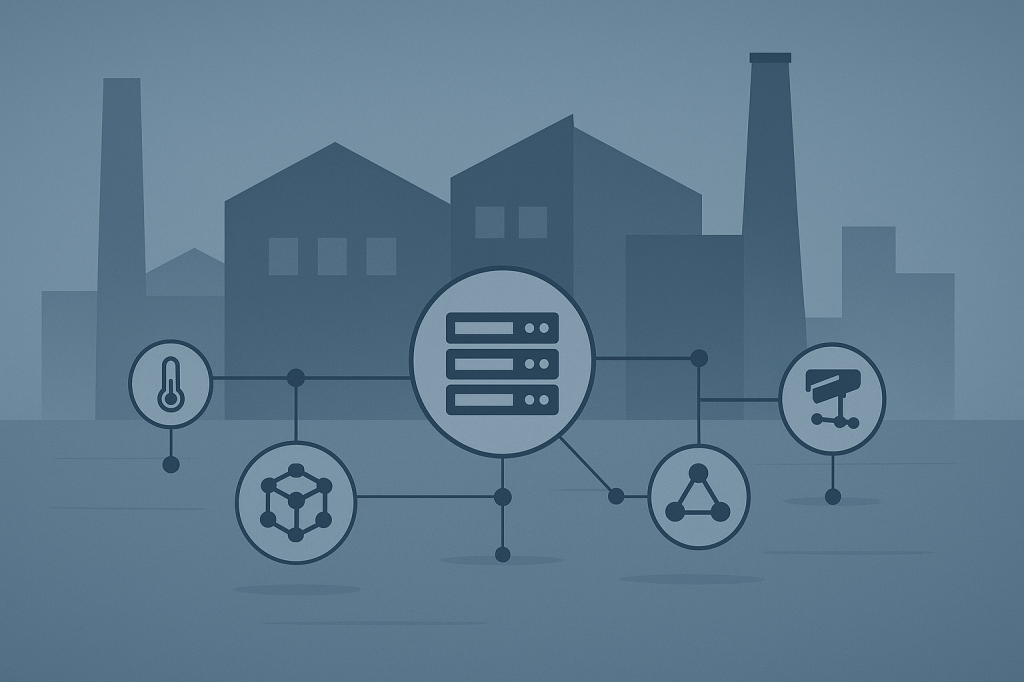
Over the last year I’ve been lucky enough to roll up my sleeves and work on a series of edge‑computing projects. One client needed to run Kubernetes clusters on the shop floor of a manufacturing facility to monitor vibration sensors and trigger maintenance alerts within seconds; another wanted to deploy AI‑powered cameras in retail stores without sending every frame back to the cloud. Those experiences taught me that when you push computing out of the data center and into the real world, the rules change—latency matters more than ever, bandwidth is expensive, and reliability can’t be an after‑thought. That’s where edge computing shines.
Why the edge is taking off
The traditional cloud model—collect data at the edge, ship it across the internet for processing, then send back the results—introduces latency and burns through bandwidth. Edge computing flips that model by processing data locally and only sending critical results or aggregated insights to the cloud. Bringing compute closer to the source has several advantages:
- Reduced latency. Local processing means faster responses, which is critical for real‑time analytics, industrial automation and autonomous systems.
- Lower bandwidth usage. Raw sensor data doesn’t need to be streamed constantly, cutting network costs.
- Higher reliability. Applications continue running autonomously even during cloud outages.
- Improved security and compliance. Sensitive data stays on site, supporting privacy and data‑sovereignty requirements.
Analysts predict that roughly three‑quarters of enterprise‑generated data will be processed at the edge by 2025. That statistic may sound audacious, but when I see how quickly edge deployments are growing in manufacturing, retail and transportation, it feels believable.
Kubernetes as the glue
Kubernetes has become the de facto standard for orchestrating containerized workloads. In 2025 it’s not just about cloud clusters—half of adopters now run production Kubernetes at the edge. What’s driving that adoption? For one, Kubernetes abstracts away the complexity of distributed systems: you describe your desired state in a YAML file and the platform makes sure it happens, even across thousands of nodes. Its self‑healing capabilities automatically reschedule workloads when a node fails. And it’s immensely portable: containerized apps run consistently whether on a rack server, a factory gateway or a wind turbine.
Lightweight Kubernetes distributions—such as K3s, MicroK8s and KubeEdge—strip out non‑essential components to fit on resource‑constrained devices. For example, KubeEdge runs on as little as ~70 MB of memory yet scales to thousands of nodes. These mini‑distros enable you to bring the full Kubernetes API to IoT gateways, Raspberry Pi clusters and other edge devices. Centralized fleet‑management tools then let you manage security, updates and observability across hundreds of clusters from a single pane of glass.
Real‑world use cases
On the shop floor project I mentioned earlier, we deployed a trio of K3s clusters on industrial PCs right next to the production line. Sensors streamed vibration and temperature data into a Grafana dashboard, and when the metrics breached thresholds, a Go‑based controller kicked off a maintenance workflow. The entire round‑trip—from sensor to alert—took under a second because everything ran locally. In another engagement we used KubeEdge to orchestrate AI models on NVIDIA Jetson devices in retail stores; by processing video feeds on‑premises we avoided saturating WAN links and complied with data‑privacy rules.
Beyond these anecdotes, industry reports show similar patterns. Enterprises are turning to edge computing for AI workloads because shipping massive models and data back to the cloud is cost‑prohibitive. Containerized applications with embedded observability and orchestration are becoming the cornerstone of scalable edge deployments across retail, healthcare and manufacturing. And as the Scale Computing article notes, by processing data locally at the edge organizations mitigate unpredictable cloud costs while enabling real‑time ins
Security and operations
Running clusters in the wild introduces new risks. Devices may sit in unattended locations and communicate over public networks. On one consultancy engagement we discovered that a publicly exposed cluster had been probed by bots within minutes of deployment. Hardened configurations, network policies and least‑privilege access quickly moved from theoretical best practices to operational necessities. Reports from 2025 highlight the importance of using trusted, minimal container images and scanning them for vulnerabilities with tools like Trivy or Clair. In 2022, 44% of surveyed organizations were still running the majority of workloads with root privileges—a sobering statistic that underscores the need for rigorous security standards at the edge.
Fortunately, the ecosystem is improving. Role‑based access control and network policies are baked into Kubernetes, while operators and GitOps workflows help ensure consistent configurations across fleets. The “friction” of deploying Kubernetes at the edge is dropping thanks to innovations like Cluster API for declarative bare‑metal provisioning and storage projects such as Rook; networking improvements like MetalLB and Cilium bring enterprise‑grade load balancing and eBPF‑powered visibility. As a result, it’s now feasible to manage hundreds of remote locations using lightweight distros like K3s without requiring specialist expertise at each site.
‘Trendy’ in 2025/Q1-Q2-2026
Looking ahead, I see a few trends shaping the edge landscape:
- AI at the edge. In the 2025 Spectro Cloud survey, 90% of teams expect their AI workloads on Kubernetes to grow in the next 12 months. The demand for GPU‑accelerated clusters and edge inference platforms will only increase.
- Zero trust and hyper‑constrained devices. Edge environments will adopt zero‑trust architectures and support ultra‑small form‑factor hardware, such as Jetson Orin Nano modules. Miniaturization and cost reductions will unlock new use cases across industries.
- Alternatives and extensions to Kubernetes. While Kubernetes remains dominant, some organizations are exploring platforms that can run containers, VMs and WebAssembly side by side. Projects like KubeVirt extend Kubernetes to manage VMs, and others may emerge to handle specialized workloads.
- Automation and self‑healing. Automation combining infrastructure as code, observability and orchestration will bring cloud‑like simplicity to the edge. Self‑healing clusters that automatically roll back or reprovision nodes when faults occur will become the norm.
Final thoughts
Edge computing isn’t a buzzword—it’s a practical shift in how we build systems. After spending countless hours configuring clusters in server closets and on factory floors, I can say that the benefits are tangible. With the right combination of lightweight Kubernetes, security hygiene and automation, you can deploy resilient, low‑latency applications anywhere data is generated. As more of our data—and our AI models—move to the edge, the challenge will be to stay ahead of the operational complexity. But that’s the kind of challenge that makes this work exciting..
 Germán M. Yébenes